Letter 1: British Columbia Is Beautiful, But Beauty Is Not the Same as Protection
This is the first letter in Borrowed Ground: BC Nature Letters, a summer digital storytelling series under TalkClimateAfrica Spotlight, exploring nature and conservation in British Columbia.
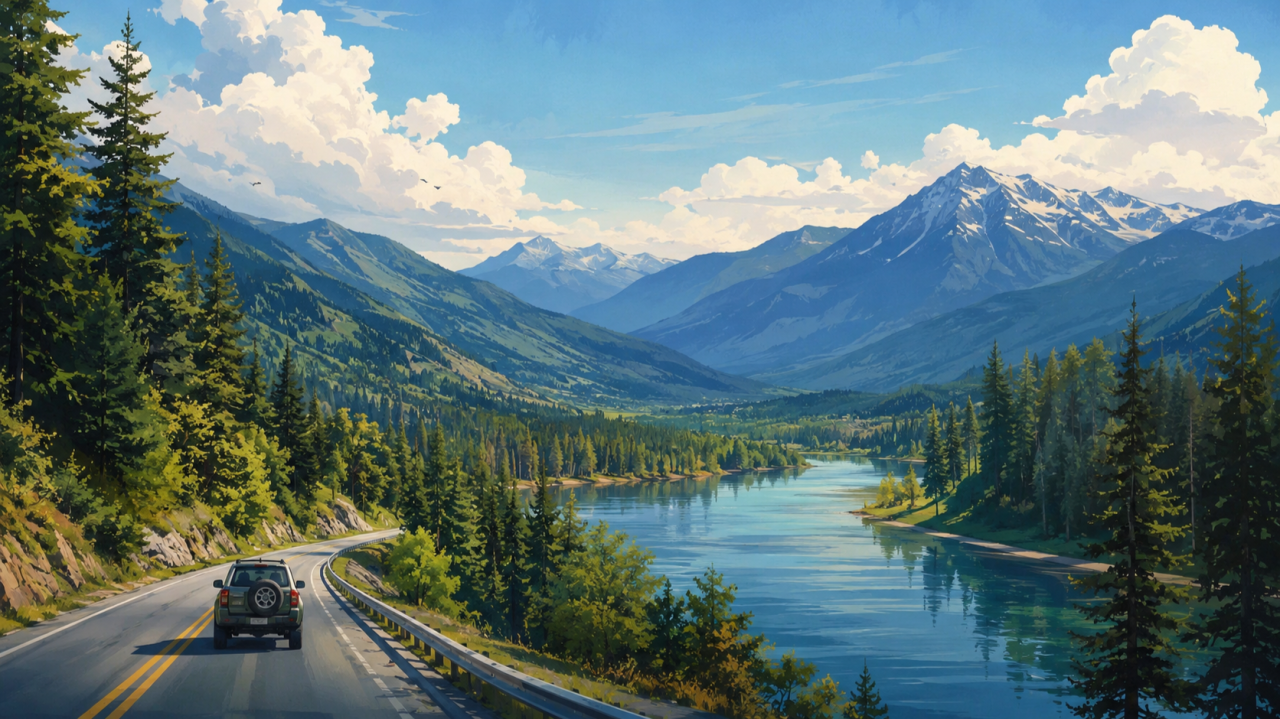
When I think about my first real encounter with British Columbia’s landscape, I remember my first road field trip to Nelson. We were on the road for almost a week, moving through places that felt peaceful, wide, clean, and alive. I remember looking through the window and seeing mountains rise around us, tall trees standing along the roads, quiet valleys opening into the distance, rivers cutting through the landscape, and forests that seemed to stretch farther than my eyes could hold.
There was something about that journey that made BC’s beauty difficult to ignore. The mountains were not just far away in the background; they surrounded the road. The trees were not just scenery; they felt present, steady, and old. The air felt cleaner, and the towns, rivers, forests, and valleys all carried a quiet beauty that did not need to announce itself. For someone still learning the landscape of this province, I kept remembering the trip. It showed me why many people describe British Columbia as one of the most beautiful places in Canada.
But as I continued to learn more about conservation, forestry, climate, and land use, that same beauty began to raise a deeper question for me. What does it mean to love a place because it looks beautiful, while not fully knowing whether that place is protected, healthy, or secure for the future? That question sits at the heart of this first letter, because a place can be beautiful and still be vulnerable.
It is easy to mistake beauty for safety. When trees are still standing somewhere, we may assume the forest is fine. When mountains still look untouched from the road, we may assume the land is secure. When rivers still move through valleys, we may assume the water is healthy. When a place looks clean and green, we may assume it is protected. But conservation teaches us that what we see is not always the full story. A forest can look endless from a distance and still be fragmented. A river can still flow and still be under pressure from heat, pollution, habitat loss, or poor land-use decisions. An ocean can still shine and still be changing beneath the surface.
In British Columbia, nature is part of daily life. It is in the mountains where people hike, the forests people pass on highways, the rivers that hold salmon, the coastlines that shape communities, and the green spaces that give many people room to breathe. But nature here is not only scenery. Forests store carbon, hold soil, provide habitat, and help regulate water. Wetlands filter water and reduce flood risks. Rivers connect ecosystems. Oceans support food systems, culture, livelihoods, and marine life. Healthy ecosystems also support human health, community well-being, and climate resilience.
This is why nature needs more than admiration. It needs care, space, stewardship, monitoring, and strong decisions. It needs people who understand that conservation is not only about protecting places that look beautiful in photos. It is also about protecting the living systems that make those places function.
Across Canada, there is now a major commitment to protect more land and water by 2030. This is often called 30×30, which means protecting at least 30 percent of lands and waters by the year 2030. Canada’s 2030 Nature Strategy includes the goal of protecting at least 30 percent of terrestrial and inland water, as well as coastal and marine areas, by 2030. In British Columbia, the Tripartite Framework Agreement on Nature Conservation also includes a commitment to protect and conserve at least 30 percent of lands and freshwater in BC by 2030.
That target matters because British Columbia holds forests, coastlines, wetlands, rivers, grasslands, alpine areas, and species that cannot simply be replaced once they are lost. Protected areas are one way of giving ecosystems the space and legal recognition they need to survive, recover, and remain connected. They are not the only conservation tool, but they are an important one.
The numbers help tell the story, but they also show the size of the work ahead. BC has committed to increasing the percentage of its land base that is protected to at least 30 percent by 2030, and this will require partnerships among First Nations, the Province of British Columbia, and the Government of Canada. The same agreement also speaks to biodiversity, habitats, species at risk, nature-based climate solutions, and better data and knowledge systems.
Organisations like Canadian Parks and Wilderness Society – British Columbia (CPAWS-BC) The Nature Trust of British Columbia Watershed Watch Salmon Society , and continue to play important roles in helping the public understand what nature protection means in practice, from protected areas and land conservation to salmon habitat, environmental law, and public engagement.
Still, numbers alone do not always move people. A percentage does not always help someone picture a salmon returning to a river. A target does not always help someone imagine an old forest that has stood longer than any of us have been alive. A conservation plan does not always show the child who may grow up without seeing the same wildlife, forests, and clean waters we once assumed would always be there.
That is why storytelling matters. Conservation communication is not only about giving people information. It is about helping people understand why that information matters. When we say “protect 30 percent,” we are not only talking about a number in a government document. We are talking about whether future generations will inherit living forests, clean water, healthy coastlines, connected wildlife habitats, and places where nature is allowed to recover.
When we talk about protected areas, we are not only talking about drawing lines on a map. We are talking about giving ecosystems the room they need to function. When we talk about biodiversity, we are not only talking about plants and animals in a report. We are talking about relationships between soil, water, insects, trees, fish, birds, people, weather, food, culture, and memory. This is why BC cannot only be loved as scenery. It must be understood as a living place.
There is a difference between enjoying nature and protecting nature. Enjoying nature may mean taking a photo of the mountains. Protecting nature means asking whether those mountains, forests, rivers, and species are being cared for in ways that will last. Enjoying nature may mean visiting a park. Protecting nature means supporting healthy, connected, and well-managed protected areas. Enjoying nature may mean saying, “BC is beautiful.” Protecting nature means asking, “What are we doing to make sure it remains alive?”
That question matters because conservation is not automatic. Forests do not protect themselves from poor decisions. Rivers do not vote in public meetings. Salmon do not write letters to decision-makers. Old trees do not attend policy discussions to explain why they matter. Wildlife corridors do not speak when they are cut apart. People have to pay attention. Communities have to ask questions. Decision-makers have to hear that nature protection is not a side issue. It is connected to climate resilience, public health, food systems, culture, and the safety of future generations.
This does not mean every person has to become a conservation expert. It does not mean everyone must know every policy detail. But it does mean more of us need to understand the basics. What is being protected? Who is leading the protection? Whose knowledge is being respected? What species and ecosystems are at risk? What happens if we wait too long? What kind of BC do we want to leave behind?
These are not only environmental questions. They are public questions. They belong in classrooms, newsletters, community conversations, family discussions, and everyday life.
One of the reasons I created Borrowed Ground: BC Nature Letters is that conservation can sometimes feel like a conversation happening somewhere else. It can sound like something reserved for scientists, policymakers, campaigners, or people who already know the language. But nature belongs to all of us, and the future of nature should not be explained only in complicated language.
A newcomer should be able to understand why BC’s forests matter. A student should be able to understand what 30×30 means. A young person should be able to ask why salmon are declining. A community member should be able to see the link between protected areas and climate resilience. A reader should be able to move from concern to understanding, and from understanding to action.
That is the heart of this series. The title Borrowed Ground comes from a simple belief: the land we live on is not something we own without responsibility. It is something we inherit for a time, something we borrow, and something we must return with care.
BC’s beauty is real. I saw it on that road trip to Nelson. I saw it in the mountains, in the tall trees, in the clean views, and in the quiet strength of the landscape. But beauty alone will not protect the forests. Beauty alone will not restore salmon habitat. Beauty alone will not stop biodiversity loss. Beauty alone will not create protected areas. Beauty alone will not keep waters healthy.
Protection requires choices. It requires listening to Indigenous leadership and stewardship. It requires a stronger public understanding. It requires people to ask better questions. It requires us to look at the places we love and refuse to treat them as unlimited.
So this first letter is an invitation. The next time you see the mountains, the trees, the ocean, or a river in British Columbia, pause for a moment. Do not only ask, “Isn’t this beautiful?” Ask also: Who is protecting it? Is it enough? What does this place need from us?
Because BC is beautiful. But beauty is not the same as protection. And if we love this place, admiration cannot be where the story ends. It has to be where responsibility begins.
This article is part of Borrowed Ground: BC Nature Letters, a summer digital storytelling project on nature and conservation in British Columbia.
The project is shared through TalkClimateAfrica Spotlight and will continue as an ongoing space for simple, public-facing conservation writing.
Reflection question: What is one place in BC that made you feel connected to nature, and what do you think it needs to be protected for the future?

Leave a Reply