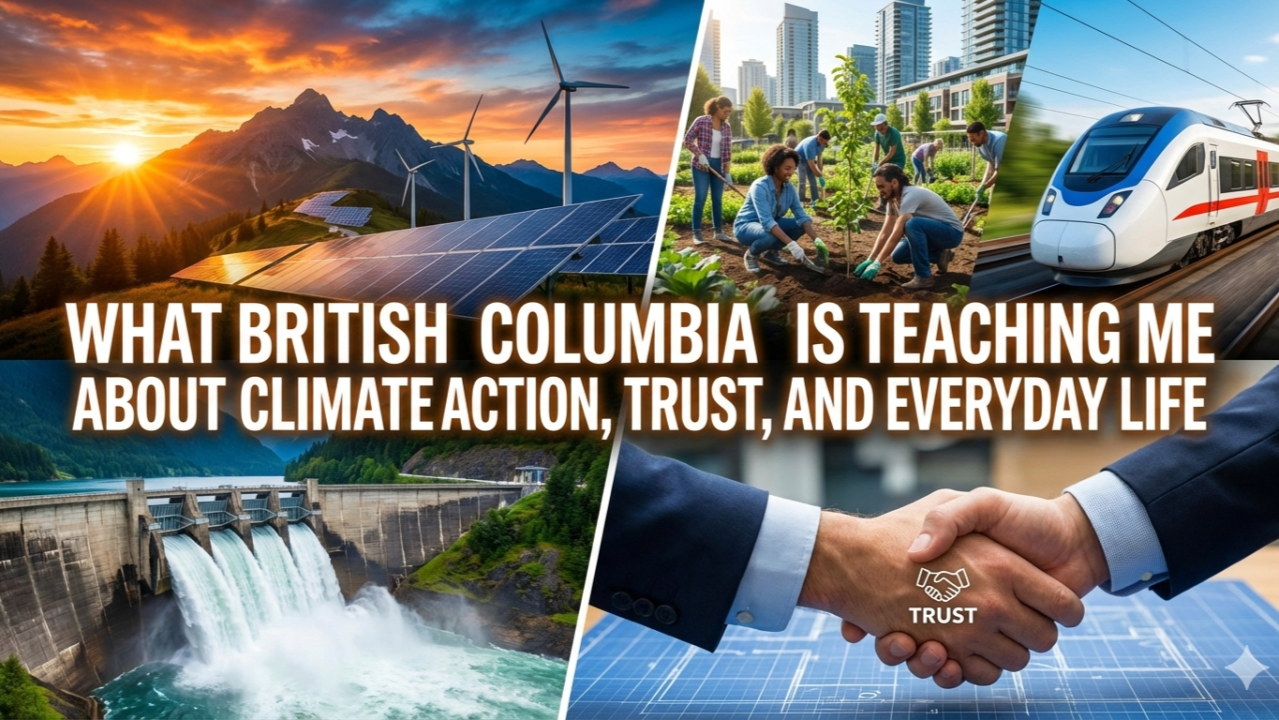
What British Columbia Is Teaching Me About Climate Action, Trust, and Everyday Life
British Columbia does not need to be told that climate change is real because people here are already living with it.
Every summer, wildfires return and smoke fills the air, staying for days at a time, heat waves last longer than they used to, floods wash out roads and disrupt simple routines like getting to work, taking children to school, or visiting places people care about. These are no longer rare events or distant warnings, they have become part of ordinary life in this province.
Still, knowing climate change is happening is not the same as trusting how we respond to it.
That difference becomes clear when you listen closely to people, not in official meetings or written reports, but in everyday places like buses, grocery stores, small forest towns, and during long drives between work and home. What many people are expressing is not rejection of climate action, it is uncertainty. Beneath many conversations sits a quiet and honest question: Does this transition make sense for my life
British Columbia is often described as a climate leader and that description is fair. The province introduced the first broad carbon tax in North America, invested early in clean electricity, and set strong climate targets. These choices helped reduce pollution and encouraged cleaner technologies and they remain real achievements.
But leadership does not end with good policy ideas, it is tested when those ideas meet daily life.
For most people, climate policy is not something they read about, it is something they feel. It shows up when they fill their cars with fuel, when power bills arrive, when the cost of living rises and choices feel tighter. Policies designed to guide long term change often arrive as short term pressure.
Carbon pricing is a clear example. The idea is simple, reduce pollution by encouraging cleaner choices. For some people, this works well because they have options. For others, those options are limited. A commuter in Surrey may want to drive less but still needs a car to get to work. A renter in Vancouver may hear about home energy upgrades but cannot change a building they do not own. In rural and northern communities, long distances mean driving is not a preference but a necessity. These experiences are not complaints, they are facts of daily life.
When policy assumes everyone can adjust in the same way, people who cannot do so easily begin to feel left out and over time that feeling weakens trust
This connection between climate, work, and daily life becomes even clearer in British Columbia’s forests.
Forestry has shaped this province for generations. Many communities depend on forests for jobs, income, and stability. At the same time, forests are among the areas most affected by climate change. Hotter summers, longer dry periods, insects, and larger wildfires are changing how forests grow and how safe it is to work in them.
For people in forest communities, climate change is not an abstract idea. It is seen in burned hillsides, shorter work seasons, closed highways, and growing safety risks. In these places, climate policy is not only about reducing emissions, it is about whether communities can continue to exist and adapt.
This is where balance matters. Protecting forests without considering workers creates fear. Protecting jobs without protecting forests creates false hope. Trust grows only when both realities are taken seriously.
The Government of British Columbia has introduced rebates, credits, and programs to help people manage costs and adjust to change. These efforts matter, but support only works when people understand it and can access it.
When programs are confusing or difficult to reach, people often feel they were not meant for them. Even well designed policy can feel distant if it is not clearly explained. Trust does not come from announcements alone, it comes from clarity and from showing people how policy connects to their lives.
While these conversations continue, climate impacts keep moving faster.
Smoke affects health and work. Heat waves put heavy pressure on homes and hospitals. Floods damage roads and disrupt supply chains. These events affect everyone, but not everyone has the same ability to prepare for them or recover afterward.
Climate policy exists to reduce these risks over time, but when the costs of action are felt immediately and the benefits feel far away, people lose sight of why the policy exists in the first place. This is why communication matters as much as policy itself.
British Columbia is not failing on climate, it is being asked to go deeper.
The next step is not only about setting targets, it is about building confidence. That means explaining policies in simple language, designing solutions that work for renters, rural communities, and forest towns, and acknowledging that people start from different places.
Climate action lasts when people see it as protection rather than punishment and when it feels like something built with them, not imposed on them. British Columbia has already shown that strong climate action is possible. The challenge now is keeping people with it.
The future of climate policy here will not be decided only in offices or reports, it will be shaped at kitchen tables, on job sites, on highways, and in forest communities across the province. This is what British Columbia is teaching me. Climate action works best when it is clear, fair, and trusted enough to become part of everyday life.

Leave a Reply